
Short answer
The door doesn't go away just because you stopped parking in there. You have three real choices: keep it fully working behind your new room, seal and insulate it properly as part of the wall, or replace the whole opening with framed wall. What you can't do is just unplug the opener and forget about it — that's the option that causes problems two winters later.
Why you can't just "leave it alone"
A lot of Westerville homeowners finish the garage, push the opener remote into a junk drawer, and move on. The door itself is still there, still made of thin metal or wood panels, still sitting in an opening that was never built to be a finished wall. It wasn't designed to block drafts, hold insulation long-term, or manage moisture the way a real wall does. Treating it as a "good enough" wall usually means living with a cold spot in winter and a damp one in summer.
Option 1: Keep the door fully operational
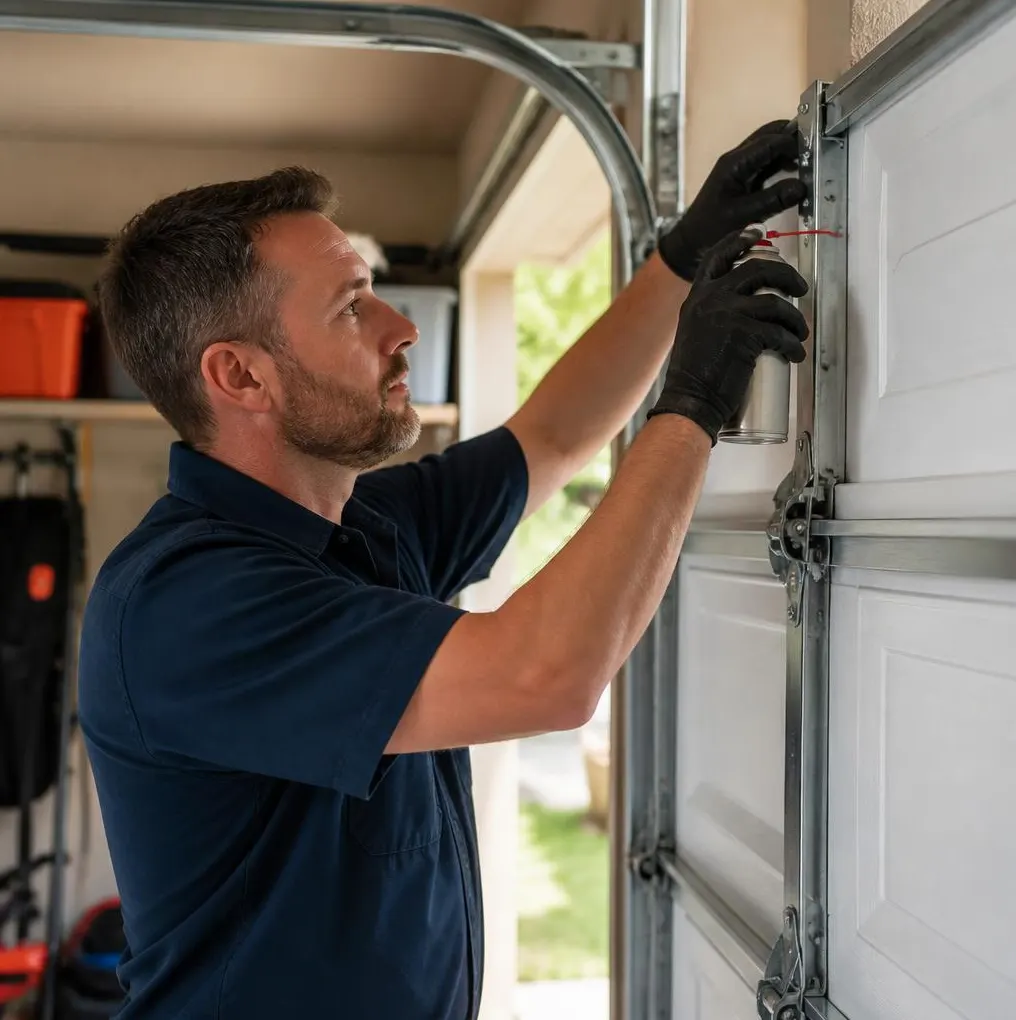
If you still want the option to park a car in there someday, or you're using the space as a workshop where you occasionally need to roll large materials or equipment in and out, keep the door and opener in working order. That means normal maintenance still applies — lubricating hardware, checking the springs, testing the auto-reverse safety feature — even though you're not opening it daily. A door that sits mostly closed for months can actually develop more spring tension problems than one used every day, because nobody notices a spring going bad until the one time they need the door.
Option 2: Seal it and insulate it as part of the room
This is the right call for a permanent gym, office, or living space. It means adding rigid foam or insulated panels to the inside of the existing door, weatherstripping every gap at the sides and bottom, and in many cases adding a layer of drywall or paneling over the whole thing so it reads as a wall, not a door. The opener gets disconnected from the door itself (not just unplugged) so nobody accidentally triggers it from outside with an old remote.
The trade-off: you lose the ability to ever use that opening as a garage door again without redoing this work. For a heated workout room or home office, that's usually a fair trade.
The moisture problem nobody warns you about
Central Ohio's swing from humid summers to cold winters is exactly the kind of climate that causes condensation on uninsulated metal doors. If you finish the room around the door but don't actually insulate and air-seal it, you get a cold metal surface sitting behind warm, humid indoor air in summer — which is a recipe for moisture beading up, dripping, and eventually feeding mold behind drywall or exercise mats. If you're converting the space, insulating the door (or removing it and framing a real wall) isn't optional — it's the difference between a usable room and a mildew problem by August.
Option 3: Replace it with a framed wall
If there's truly no future scenario where you'd want a car back in there, removing the door and framing a standard insulated wall with a window or a regular entry door is the cleanest long-term fix. No tracks, no springs, no opener to maintain — just a normal exterior wall. This is the most permanent option and the most work up front, but it ends the debate for good.
One thing to think about before you commit
Garage space is part of what buyers expect in this area, given the mix of home styles across Westerville, Polaris, Worthington, and the surrounding communities. Converting a garage permanently (Option 3) can affect resale appeal down the line if a future buyer wants covered parking back. Keeping the door functional behind a flexible setup (Option 1) is the easiest to reverse if you ever sell or change your mind.
When to call Westerville Garage Door Works
If you're keeping the door operational behind your new gym or workshop, our garage door maintenance service is the right move before you finish the walls — we'll check springs, rollers, and the opener's safety reverse while everything's still accessible. If you've decided to seal the door into the wall, we can handle the opener disconnection properly and make sure the door itself isn't a weak point for drafts or moisture before you drywall over it.
Thinking about converting your garage, or just want the door sorted out before winter settles in? Call Westerville Garage Door Works — we serve Westerville, OH and the surrounding area and can help you pick the right option for your space.