
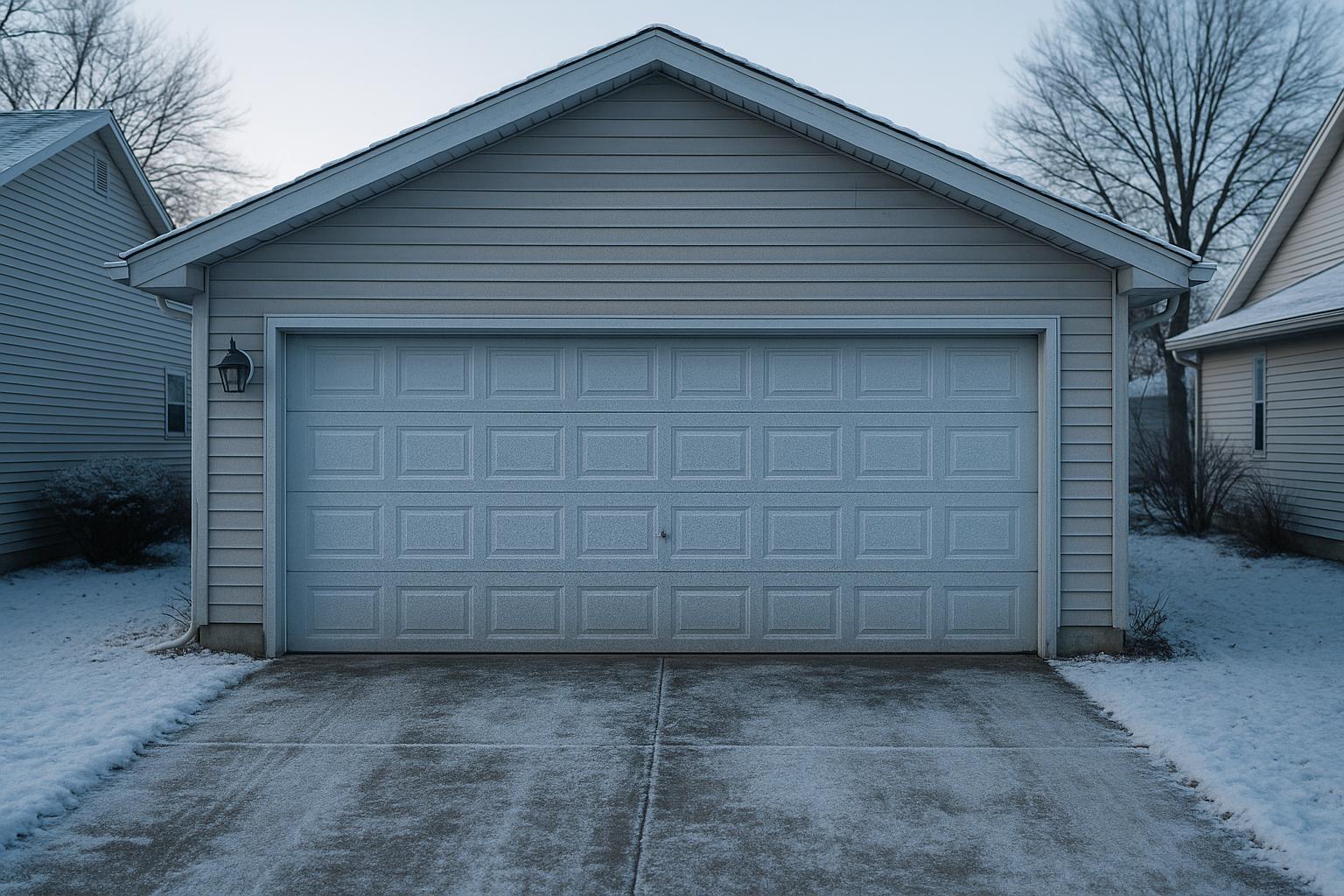
Winter and Your Garage Door: A Common Westerville Problem
If you've ever walked out on a freezing January morning in Westerville, pressed your garage door opener, and heard the motor strain while the door refuses to budge, you're not alone. Cold weather is one of the most common causes of garage door problems in central Ohio, and it can turn a routine morning commute into a frustrating ordeal.
The good news is that most cold-weather garage door issues have straightforward causes and solutions. In this guide, we'll walk through the most common reasons your garage door won't open when temperatures drop and what you can do about each one.
Why Cold Weather Affects Your Garage Door
Your garage door is one of the largest moving parts of your home, and it relies on a system of metal springs, tracks, rollers, and lubricants that are all sensitive to temperature changes. When the thermometer dips below freezing, several things can go wrong at once.
1. The Weatherstripping Is Frozen to the Ground
This is the single most common reason a garage door won't open in winter. The rubber weatherstripping along the bottom of your door is designed to create a seal against drafts, moisture, and pests. But when water collects beneath the door and freezes overnight, that seal can bond the door to the garage floor or driveway.
If your opener is straining but the door isn't moving, do not keep pressing the button. Forcing the door open can tear the weatherstripping, damage the opener's gears, or even pull the door off its tracks.
What to do:
- Use a heat gun or hair dryer along the bottom edge of the door to gently melt the ice.
- Carefully tap along the bottom seal with a flat-edged tool to break the bond without tearing the rubber.
- Once free, clear any standing water or snow from beneath the door to prevent refreezing.
- Apply a silicone-based lubricant to the weatherstripping to reduce the chance of it happening again.
2. Metal Parts Have Contracted
Metal contracts in cold temperatures. The steel tracks, springs, and hardware on your garage door can shrink slightly, causing increased friction and tighter tolerances throughout the system. This can make the door feel sluggish or cause it to stick partway through its travel.
What to do:
- Inspect the tracks for any visible misalignment or gaps.
- Make sure the tracks are clean and free of ice or debris.
- If the door is consistently difficult to operate in cold weather, the springs may need to be adjusted by a professional to account for the added resistance.
3. Lubricant Has Thickened or Hardened
Standard garage door lubricants can thicken significantly in freezing temperatures, turning from a smooth coating into a sticky or even solid layer. This creates drag on the rollers, hinges, and springs, making it harder for the opener to do its job.
What to do:
- Remove old, thickened grease from the rollers, hinges, and tracks.
- Replace it with a lithium-based or silicone-based garage door lubricant rated for cold temperatures.
- Avoid using WD-40 as a long-term lubricant — it works as a solvent and degreaser but doesn't provide lasting lubrication.
4. The Garage Door Springs Have Weakened or Broken
Torsion and extension springs are under tremendous tension, and cold weather makes the metal more brittle. A spring that was already nearing the end of its lifespan is more likely to snap during a cold snap. If you hear a loud bang from your garage or notice the door feels extremely heavy when you try to lift it manually, a broken spring is the likely culprit.
What to do:
- Do not attempt to open or repair the door yourself. Broken garage door springs are under extreme tension and can cause serious injury.
- Call a professional for spring replacement. This is one of the most common service calls we handle during Westerville winters.
5. The Opener's Power or Sensitivity Settings Need Adjustment
Garage door openers have force settings that control how much power the motor uses to open and close the door. In cold weather, the increased resistance from contracted metal and thickened lubricant can exceed the opener's force setting, causing it to stop or reverse as if it's hitting an obstruction.
What to do:
- Check your opener's manual for instructions on adjusting the force settings. Most units have adjustment screws or digital controls on the back or side of the motor housing.
- Make small adjustments and test the door after each one.
- If you're unsure about the correct settings, a technician can calibrate the opener for you during a maintenance visit.
Preventive Steps to Protect Your Garage Door This Winter
The best way to avoid a frozen or malfunctioning garage door is to prepare before the cold arrives. Here are a few preventive measures Westerville homeowners can take each fall:
- Schedule a maintenance tune-up. A professional inspection before winter can catch worn springs, dried-out lubricant, and misaligned tracks before they become emergencies.
- Replace worn weatherstripping. If the rubber seal along the bottom of your door is cracked, torn, or flattened, it's more likely to freeze to the ground and less effective at keeping out cold air.
- Keep the area beneath the door clear. Shovel snow and clear standing water from the base of the door regularly.
- Lubricate all moving parts with cold-rated lubricant. Do this at least twice a year — once in fall and once in early spring.
- Test the door's balance. Disconnect the opener and lift the door manually to about waist height. If it stays in place, the springs are balanced. If it falls or rises, the springs need adjustment.
When to Call a Professional
Some cold-weather garage door issues are easy to handle on your own — a frozen seal or a quick shot of lubricant can get you back on track in minutes. But other problems, especially broken springs, damaged openers, or doors that are off their tracks, require professional attention.
If your garage door won't open and you've ruled out the simple fixes above, or if you notice any of the following, it's time to call for help:
- A visible gap in one of the torsion springs above the door
- The door is hanging unevenly or crooked
- The opener motor runs but the door doesn't move at all
- You hear grinding, scraping, or popping sounds during operation
At Westerville Garage Door Works, we handle cold-weather garage door emergencies throughout Westerville, Columbus, Worthington, and the surrounding communities. Whether you need an emergency spring replacement or a full winter maintenance tune-up, our team can get your garage door working reliably no matter what the Ohio weather throws at it.
Don't Let Winter Catch You Off Guard
Your garage door works hard year-round, but winter puts it under extra stress. A little preventive care in the fall can save you from a costly breakdown on the coldest morning of the year. And if the cold does get the best of your door, know that fast, professional help is just a phone call away.