
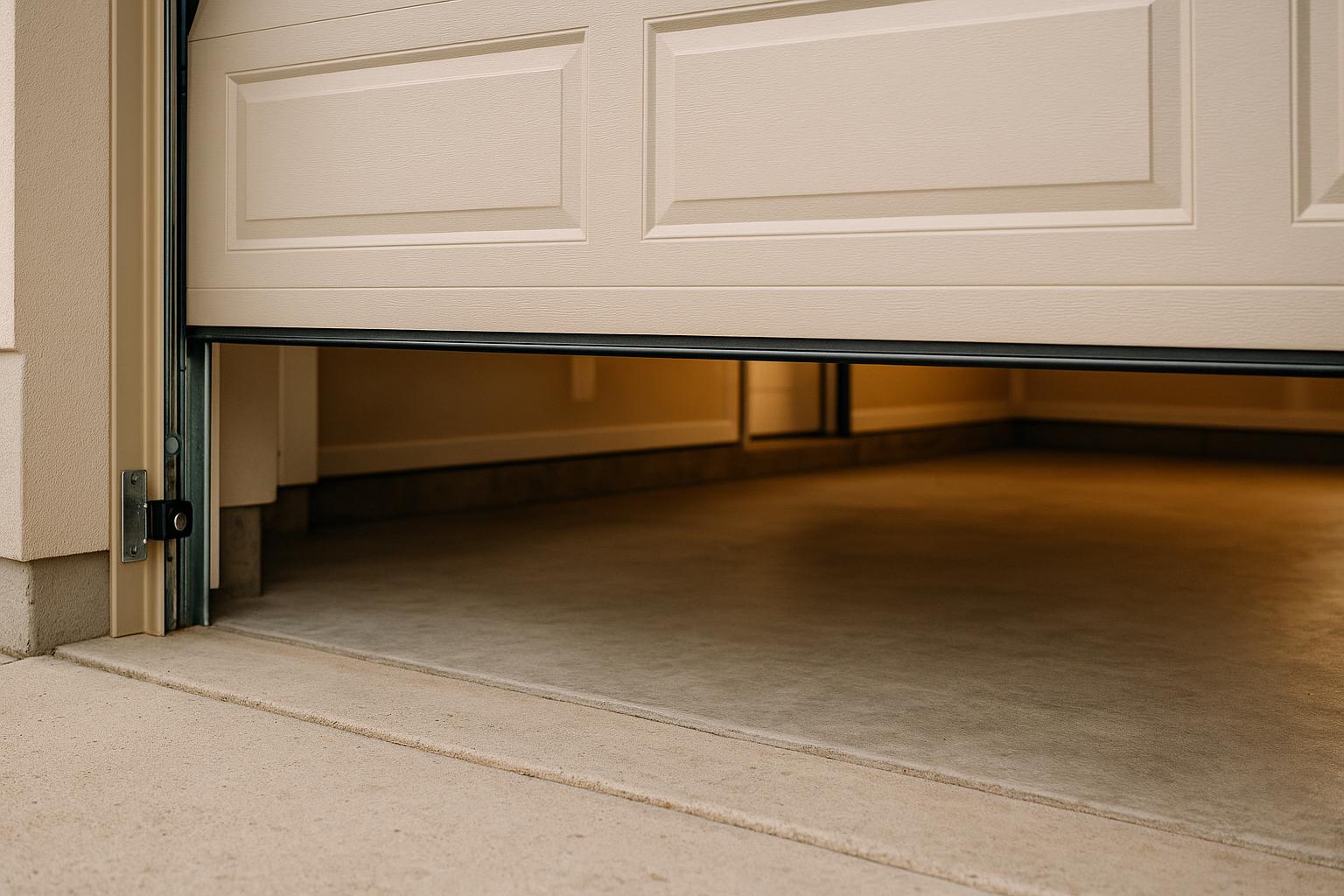
A Frustrating Problem That's More Common Than You Think
You press the button on your garage door remote, the door starts its descent, and then — just inches from the ground — it suddenly reverses and goes right back up. If this scenario sounds familiar, you're not alone. This is one of the most common garage door complaints we hear from homeowners in Westerville, and the good news is that it usually has a straightforward explanation.
A garage door that reverses before closing completely isn't just annoying — it's a security concern. An open garage door invites pests, exposes your belongings, and can compromise your home's safety. Let's walk through the most likely causes and what you can do about each one.
1. Misaligned or Dirty Safety Sensors
This is the number one reason garage doors reverse before reaching the floor. Every modern garage door opener manufactured after 1993 is required to have photo-eye safety sensors mounted near the base of the door tracks, about six inches off the ground. These sensors send an invisible beam across the opening, and if anything breaks that beam, the door automatically reverses to prevent crushing objects, pets, or people.
Here's what can go wrong with your sensors:
- Dirt or debris on the lens: Over time, dust, cobwebs, and grime can accumulate on the sensor lenses, blocking the beam. A simple wipe with a soft cloth can fix this instantly.
- Misalignment: If one sensor gets bumped — maybe by a bike, lawnmower, or even a stiff broom — the two sensors may no longer point directly at each other. Most sensors have a small LED light that glows steady green when aligned and blinks when they're not.
- Sun interference: In certain seasons, direct sunlight can hit the sensor and overwhelm the infrared beam. This is especially common during late afternoon hours when the sun sits low on the horizon. A small shade or cardboard tube around the sensor can help.
2. Incorrect Close-Limit Settings
Your garage door opener has adjustable limit settings that tell it how far the door should travel before it's considered fully open or fully closed. If the close-limit setting is off, the opener may think the door has hit an obstruction when it's actually just reaching the floor. The opener's safety mechanism kicks in, and the door reverses.
Adjusting limit settings typically involves turning a small screw or dial on the opener unit itself. However, if you're not comfortable working with your opener's settings, this is a quick fix for a trained technician. Making the wrong adjustment can cause the door to press too hard against the floor, which creates its own set of problems.
3. Worn or Broken Garage Door Springs
Your garage door springs do the heavy lifting — literally. They counterbalance the weight of the door so the opener motor doesn't have to work as hard. When springs start to wear out or lose tension, the door becomes heavier for the opener to manage. The opener may interpret this extra resistance as an obstruction and reverse the door.
If your door feels noticeably heavier when you try to lift it manually, or if you've heard a loud bang from the garage recently, you likely have a spring issue. Spring replacement is one of the most common services we perform for homeowners throughout Westerville and surrounding areas like Worthington and Gahanna. We strongly recommend leaving spring work to professionals, as these components are under extreme tension and can cause serious injury.
4. Track Problems
The metal tracks that guide your garage door need to be properly aligned and free of obstructions. Even a small bend, dent, or piece of debris in the track can cause the door to bind or stick as it travels downward. When the opener senses this resistance, it reverses.
Visually inspect both tracks from top to bottom. Look for:
- Visible bends or dents in the metal
- Gaps between the track and the wall-mounted brackets
- Loose bolts or hardware
- Small objects like stones or leaves caught in the track
Minor debris can be cleared easily, but bent tracks should be repaired or replaced by a professional to ensure the door operates safely.
5. Opener Motor or Logic Board Issues
If you've checked everything above and the door still reverses, the problem may be with the opener itself. Garage door openers contain a logic board — essentially a small computer — that controls all the door's functions. Power surges, age, and general wear can cause these boards to malfunction, sending incorrect signals to the motor.
Openers also have a force adjustment setting that determines how much resistance the motor will push through before reversing. If this setting is too sensitive, the door may reverse with very little provocation. A technician can test and recalibrate these settings or determine if the opener needs repair or replacement.
6. Weather-Related Causes
Here in central Ohio, we experience significant temperature swings throughout the year. Cold weather can cause metal components to contract and lubricants to thicken, creating additional friction in the system. The rubber weatherstripping along the bottom of your door can also become stiff and sticky in cold temperatures, creating enough resistance to trigger a reversal.
Regular seasonal maintenance — including lubrication of moving parts and inspection of weatherstripping — can prevent many of these weather-related issues before they start.
Quick Troubleshooting Checklist
Before calling for service, try these steps:
- Clean both safety sensor lenses with a soft, dry cloth.
- Check that both sensor lights are glowing steady (not blinking).
- Look for obvious obstructions in the door's path and along the tracks.
- Try closing the door using the wall-mounted button while watching the sensors — if the door closes fine with the wall button but not the remote, the issue may be with the remote itself.
- Disconnect the opener and try moving the door manually. If it's very heavy or gets stuck, the problem is mechanical rather than electrical.
When to Call a Professional
While some of these fixes are simple enough for any homeowner to handle, others require specialized tools and expertise. You should call a garage door professional if:
- You suspect a broken or worn spring
- The tracks are visibly bent or damaged
- You've tried basic troubleshooting and the problem persists
- The opener is making unusual grinding or clicking noises
- Your garage door system is more than 15 years old and experiencing multiple issues
At Westerville Garage Door Works, we diagnose and repair reversing garage doors regularly for homeowners across Westerville, Columbus, Polaris, and Delaware. Whether it's a simple sensor realignment or a complete opener replacement, we'll identify the root cause and get your door closing properly again.
Don't Ignore a Reversing Garage Door
It might be tempting to just hold the wall button down to force the door closed, but this bypasses the safety features designed to protect your family. A reversing door is your system telling you something needs attention. Addressing it promptly can prevent more costly repairs down the road and keep your home secure.
If your garage door won't stay closed and you've exhausted the DIY options, give us a call. We offer prompt service throughout the Westerville area and can usually diagnose the issue in a single visit.